
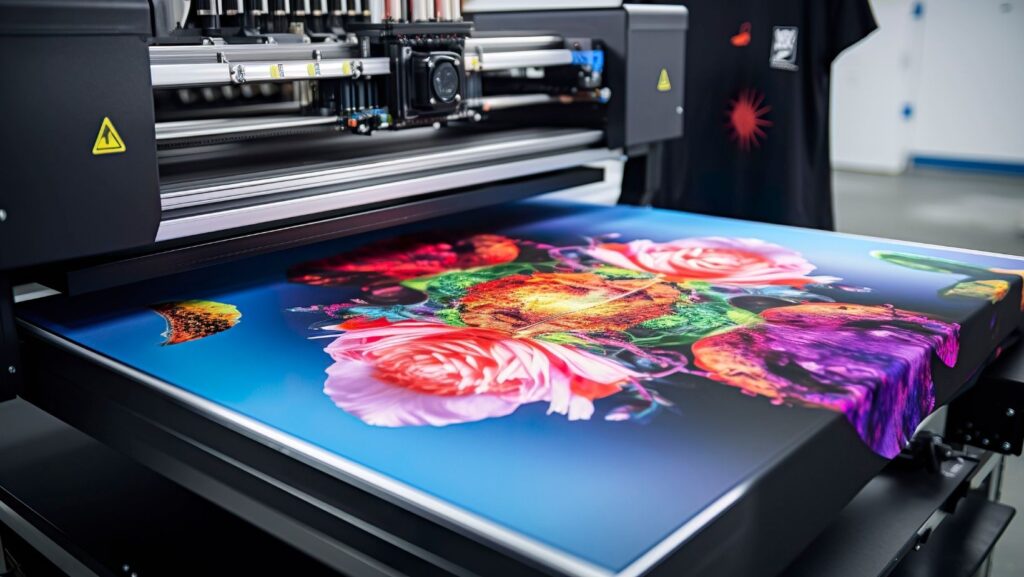
For most of printing’s history, the gap between a designer’s screen and a finished printed product has been a place where things go wrong. Colours shift. Fonts go missing. Bleed is forgotten. Images sit at 72 DPI when they should be 300. The prepress stage — the process of preparing files for print — has traditionally been where skilled operators catch these problems before they become expensive mistakes.
Now, AI is starting to change that equation. Not by replacing the expertise of experienced print professionals, but by automating the repetitive, rules-based parts of the workflow — and increasingly, by catching errors that even experienced eyes miss.
The impact is being felt across the industry — from high-volume commercial printers processing thousands of jobs per week, to boutique studios handling complex projects like professional book printing, where interior layout consistency, colour profiles, and spine calculations all have to be exactly right before a single sheet runs through the press.
Automated Preflight: From Checklist to Intelligence
Preflight — the process of checking a print-ready file against a set of technical specifications — has been automated in various forms for years. Tools like Enfocus PitStop have long been able to flag common issues automatically. But traditional preflight is essentially a rules engine: it checks what you tell it to check, and flags what matches a predefined list of problems.
AI-powered preflight goes further. Machine learning models trained on thousands of print jobs can identify issues that don’t fit neatly into a ruleset — things like a headline font that’s technically embedded but renders incorrectly on certain RIPs, or a gradient that will produce visible banding on a specific press configuration. These are the kinds of problems that used to require an experienced operator’s instinct. Increasingly, they’re being caught automatically.
Some platforms are now offering predictive preflight — not just flagging current issues, but anticipating how a file will behave at each stage of production, based on the specific press, substrate, and finishing processes in the job queue. This moves preflight from a quality check into a genuine production planning tool.
Colour Management Gets Smarter
Colour management has always been one of the most technically demanding aspects of print production. Converting between RGB and CMYK, matching a brand’s Pantone colours across different substrates, compensating for dot gain on uncoated stock — these tasks require deep knowledge and careful calibration.
AI is now being applied to colour correction and colour matching in ways that dramatically reduce the manual effort involved. Neural networks trained on press output data can predict how colours will shift under specific printing conditions and adjust source files accordingly — automatically. What previously required a skilled colour technician and several proof cycles can now be handled as part of an automated prepress pipeline.
For print buyers, this is significant. It means faster turnaround times, fewer reprints due to colour inconsistency, and more predictable results — particularly when printing across multiple facilities or production runs that need to match.
AI in the Design-for-Print Phase
The influence of AI isn’t limited to the technical prepress stage. It’s moving upstream into the design process itself — changing how designers create artwork intended for print.
Generative AI tools are now capable of producing high-resolution images suitable for print — a significant shift from earlier iterations that topped out at screen resolution. Designers are using these tools to rapidly generate background textures, product mockups, lifestyle imagery, and layout concepts that would previously have required a photographer or illustrator. The practical effect is that small businesses and internal marketing teams can now produce print-ready creative at a standard that once required an agency.
At the same time, AI-assisted layout tools are helping non-designers produce work that’s not just visually acceptable but technically correct for print — with appropriate colour modes, resolution, and safe zones built in from the start. Platforms like Adobe Express and Canva are embedding these guardrails directly into their design interfaces, reducing the volume of files arriving at print shops with fundamental technical problems.
What This Means for Print Professionals
The natural concern, when any industry sees this level of automation, is what happens to the people who currently do the work being automated. For prepress operators, the honest answer is that the role is changing rather than disappearing — at least for now.
Routine preflight checks, basic colour corrections, and standard file preparation tasks are increasingly handled by software. But the jobs that require contextual judgement — understanding a client’s brand, making a call on whether a particular effect will work on press, managing a complex multi-component job with unusual specifications — still require human expertise. The prepress professionals who thrive in this environment will be those who lean into the tools rather than resist them, using AI to handle volume while focusing their attention on the complex, high-value work.
For print shops, the opportunity is in efficiency. Faster preflight means faster job turnaround. Automated colour correction means fewer reprints. AI-assisted imposition and production planning means better press utilisation. These gains are real, and the shops investing in AI-powered workflows now are building a competitive advantage that will be hard to close later.
The Bigger Picture
AI is not going to make print production effortless overnight. The physical constraints of putting ink on substrate don’t change because the software upstream has gotten smarter. Press operators still need to understand their equipment. Colour still behaves differently on coated versus uncoated stock. Finishing still requires skilled hands.
But the distance between a designer’s creative intent and a flawless printed result is getting shorter. Files are arriving better prepared. Errors are being caught earlier and more reliably. Turnaround times are compressing. And the barrier to producing high-quality print-ready artwork is lower than it has ever been.
For an industry that has sometimes struggled to keep pace with the speed of digital, that’s a meaningful shift — and one that’s only going to accelerate.